Women’s Reproductive Health and Wellbeing
Safeguarding Maternal and Reproductive Health in Emergencies (Since 2023)
In times of crisis, women and adolescent girls are often among the most affected groups, facing heightened risks and reduced access to essential health services, safe resources, and privacy. For this reason, at Sharek Youth Forum, we ensure that our emergency response is sensitive to gendered needs and prioritizes women’s and girls’ health and dignity—especially in displacement settings where basic supplies and care can become limited. Since 2023, Sharek has prioritized maternal and reproductive health as a core component of its crisis interventions, helping women and girls protect their wellbeing during difficult conditions.
What We Provide
1) Dignity Kits for Women and Adolescent Girls
To support immediate hygiene needs, Sharek distributes dignity kits that include essential items such as sanitary products, soap, and basic hygiene supplies—helping women and girls maintain cleanliness, comfort, and dignity during displacement.
Annual distribution range: 5000+ kits per year
2) Postpartum Kits for New Mothers
Recognizing the unique needs of women after childbirth, Sharek provides postpartum kits designed to support mothers and newborns in the early days following delivery, especially in emergency settings where services and supplies may be disrupted.
Annual distribution range: 1000+ kits per year
3) Reproductive Health Awareness and Psychosocial Support
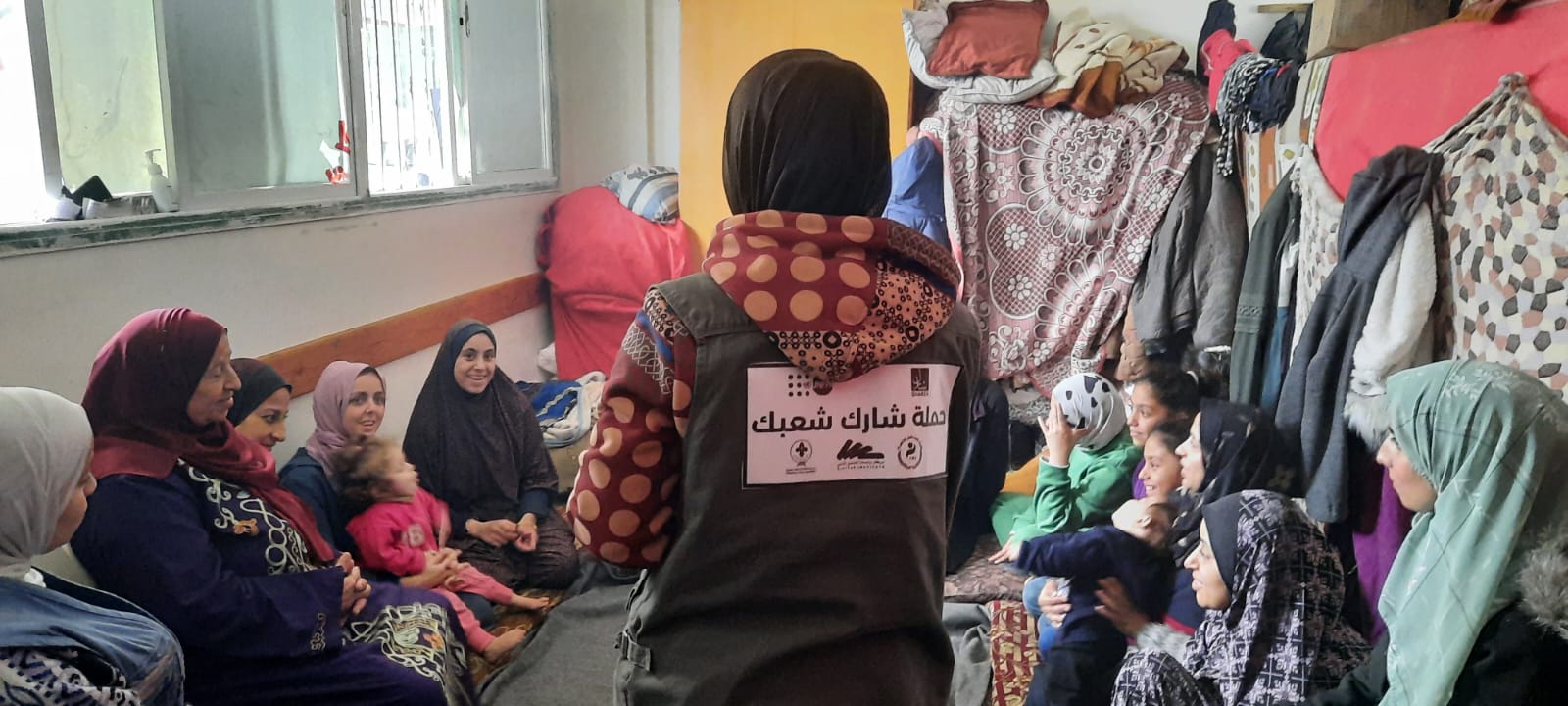
Alongside material support, Sharek delivers reproductive health awareness sessions in partnership with healthcare providers. These sessions provide practical, age-appropriate information and help women make informed decisions about their health. The programme also integrates psychosocial support to help women cope with stress, anxiety, and the emotional pressures of crisis and displacement.
Why It Matters
By combining essential supplies with awareness and psychosocial support, Sharek helps protect women’s health, strengthen resilience, and ensure that maternal and reproductive wellbeing are not overlooked—especially during emergencies.